Thai traffic looks chaotic from a hotel balcony, but the rules are strict on paper and, since April 2026, stricter in practice. From 1 April 2026 the Royal Thai Police stopped issuing warnings for ten major offences and started fining straight away. This guide to Thailand road rules for tourists covers what matters most on a rented scooter or car in Pattaya, which offences police now fine for, how a fine is paid and what to do if the police stop you or you have an accident.
Thailand road rules for tourists: the basics

- Keep left. Traffic in Thailand drives on the left. On multi-lane roads scooters are expected to stay in the left lane.
- Helmets for everyone on a bike. Thai law requires both the rider and the passenger to wear a helmet.
- Seat belts for everyone in a car, including rear-seat passengers.
- Pedestrian crossings. Drivers must stop for pedestrians at marked crossings. Failing to do so is now one of the ten priority offences.
- No phone in your hand. Using a phone while driving is allowed only with hands-free equipment.
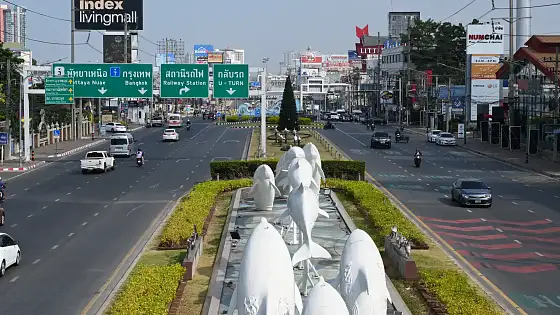
- Speed limits depend on the area and road type, so follow the signs. In town, songthaews stop suddenly and U-turn slots on Sukhumvit Road create fast merging traffic.
- One-way streets. In central Pattaya, Beach Road and Second Road are one-way and form a loop. Follow the arrows rather than your navigation app’s shortcut. How traffic, hills and parking differ in the centre, Jomtien, Pratumnak and Naklua is covered in our guide to Pattaya areas by scooter.
Before riding, make sure your licence covers the vehicle. Thailand treats mopeds as motorcycles, so any scooter requires a motorcycle category, explained in our guide to the driving licence for Thailand and the IDP. Our guide to scooter rental for tourists covers safe riding in more detail.
Alcohol limits
The general limit is 50 mg of alcohol per 100 ml of blood. A stricter limit of 20 mg applies to drivers under 20, holders of a provisional licence and anyone driving without a valid licence. Since September 2024, police can test urine or blood if a driver refuses the breathalyser, and a driver who refuses a medical test without good reason is presumed to be over the limit.
Drink driving can bring a fine, up to one year in prison, or both. Smartraveller notes that travel insurance may be void if your blood alcohol level is over a certain limit. Expect extra checkpoints at night and during holidays such as Songkran and New Year. If the 20 mg limit applies to you, do not drink at all before riding, or take a taxi.
Traffic fines in Thailand: what police fine for since April 2026
In March 2026 the police announced ten offences they would fine without a warning. Here is the list, with what each one means on the road in Pattaya:
| Offence | What it means for a tourist |
|---|---|
| Speeding | Limits change between town streets and highways; watch the signs on Sukhumvit Road |
| Running a red light | Stop at the line; amber is not a reason to speed up |
| Not stopping for pedestrians at a crossing | Stop at zebra crossings, even if local drivers do not |
| Using a phone without hands-free equipment | Mount your phone for navigation; do not hold it while riding |
| Driving against the traffic | A short ride the wrong way to reach a U-turn still counts; ride round the block instead |
| No helmet (rider or passenger) | Ask the partner for a second helmet if you ride two-up |
| No seat belt (driver or passenger) | Applies to rear seats too |
| Not carrying a driving licence | Keep the original licence and IDP with you, not in the hotel safe |
| Drink driving | Can mean prison as well as a fine |
| Driving without regard for the safety of others | Weaving, racing and dangerous overtaking; can also mean prison |
We do not quote amounts on purpose. Thai law sets maximum penalties, the officer writes the actual amount on the ticket, and the police raised several maximums in 2026. Driving without a licence for the vehicle category is a separate offence that can lead to a fine, up to one month in prison, or both. For the current figures, rely on the ticket itself, the police station named on it, or the Tourist Police on 1155.
How traffic fines are paid
A legitimate fine always comes with a ticket. The officer either writes it by hand or issues an electronic ticket with a barcode or QR code. The ticket shows the offence, the amount and how to pay.
- Pay at the police station named on the ticket or through the payment channels printed on it, before the deadline shown.
- Keep the receipt until you fly home.
- Some tickets arrive later by post, after a camera records the offence. Ask the partner at handover how they handle tickets that reach them after you return the vehicle.
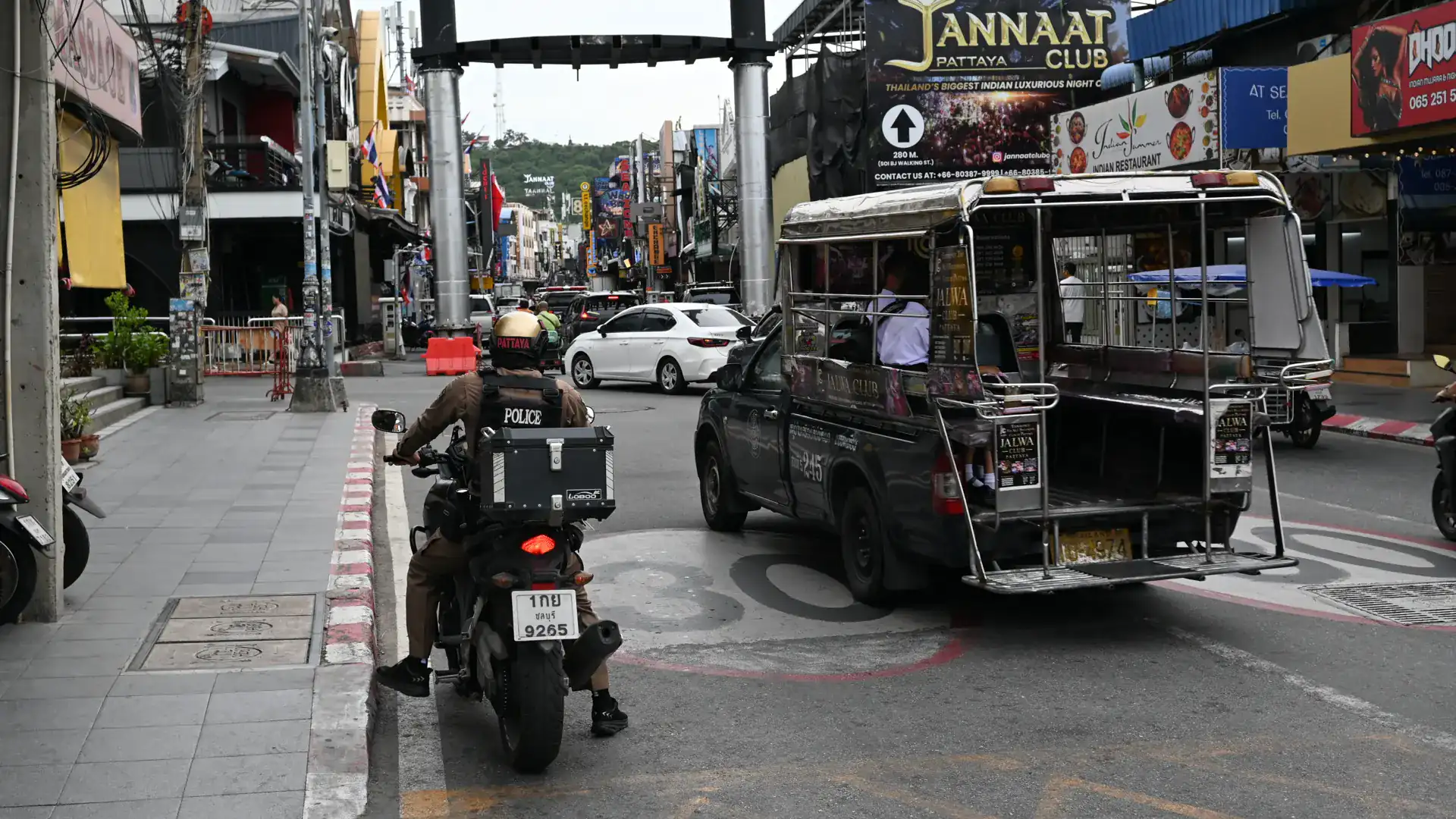
- If an officer asks for cash with no ticket, ask politely for an official ticket. If the situation gets tense, call 1155.
If the police stop you
- Pull over where it is safe, switch off the engine and stay calm and polite.
- Show your national licence, International Driving Permit and the rental agreement. Police may also ask for your passport. GOV.UK says a copy of the photo page is usually enough, but you may be asked to bring the original to a police station within 24 hours.
- If you are fined, ask for an official ticket. Pay at the police station or through the channels printed on the ticket and keep the receipt.
- Do not offer cash to an officer at the roadside. Bribery is an offence for the person who offers it too.
- Since a 2019 amendment to the Land Traffic Act, officers issuing a ticket no longer keep the driver’s licence.
- If you cannot understand each other, call the tourist police on 1155.
After an accident
- Stop, switch on the hazard lights and make the scene safe.
- If anyone is hurt, call 1669 for an ambulance. Call the police on 191 and the tourist police on 1155.
- Unless the vehicles block traffic dangerously, take photos and video before moving them: positions, number plates, damage and road markings.
- Call the rental partner and ask for the insurer’s contact details.
- Do not sign documents in Thai that you do not understand. Ask for an interpreter, and contact your embassy if you are detained.
- Notify your travel insurer as soon as possible.
Smartraveller warns that after an accident police may detain a foreign driver until compensation is agreed. How compulsory insurance, the rental company’s cover and travel insurance share the costs is explained in our guide to rental vehicle insurance in Thailand.
Where to rent a scooter or car for driving in Pattaya
The rules are the same for any vehicle, but the checks differ: a licence category and two helmets for a scooter, seat belts in every seat of a car. Examples from the Pattaya scooter rental catalogue and the car rental section:
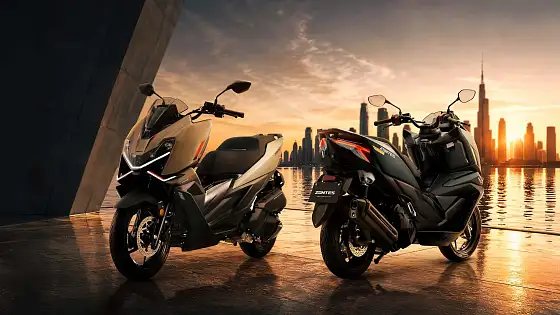
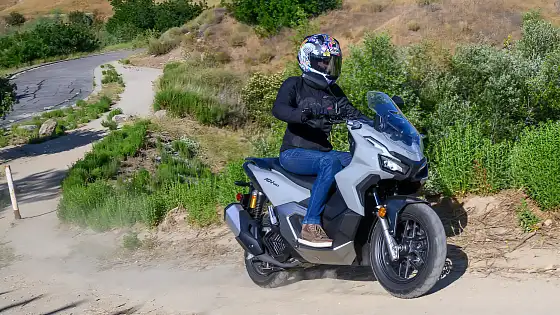
- Zontes 150X 2026 scooter: new, 150 cc, 18 hp, automatic, two seats. Over 125 cc, so it needs category A; take a second helmet for a passenger.
- MG 5 2025 automatic sedan: new, 1.5 litres, 114 hp, five seats. For families and groups; rear passengers buckle up too.
- Nissan Almera 2022 sedan with automatic transmission: 100 hp, five seats, good condition. For drivers with category B only.
All three are listed by KERBITSKII KONSTANTIN; the catalogue also has other partners. Current terms are on each listing page. Keep the rental agreement with you, as police may ask for it at a stop. Routes for longer drives are in our guide to day trips from Pattaya by car or scooter.
Quick answers
Do you need a helmet on a scooter in Thailand?
Yes, both the rider and the passenger. Riding without a helmet is one of the ten offences police fine for without a warning since 1 April 2026.
What is the alcohol limit for driving in Thailand?
50 mg per 100 ml of blood. The limit drops to 20 mg for drivers under 20, provisional licence holders and anyone without a valid licence.
How do I pay a traffic fine in Thailand?
Use the official ticket: pay at the police station named on it or through the channels printed on it, and keep the receipt. Do not hand cash to an officer at the roadside.
What should I do if the police stop me in Pattaya?
Pull over safely, show your licence, IDP and rental agreement, and ask for an official ticket if you are fined. Call the Tourist Police on 1155 if you need English.
This article is general information. Fines and enforcement practice change, so check current rules and the rental partner’s terms before you drive.